Factory Planning, General Planning
Aviation & Shipping
Factory and General Planning for a Site Expansion to Support the Pre-Assembly of Helicopter Airframes

The demands placed on production systems are undergoing fundamental changes—in Germany, this particularly affects the mechanical and plant engineering sector, which, with its successfully developed cluster regions in Baden-Württemberg, Bavaria, North Rhine-Westphalia, and parts of northern Germany, has long been regarded as an industrial engine and has produced numerous “hidden champions.” Currently, however, the industry is facing rising costs, volatile markets, and geopolitical uncertainties. At the same time, different challenges are emerging depending on a company’s strategic focus: On the one hand, select machinery and plant manufacturers must rapidly establish and expand production capacities in order to become part of the supply chain of thriving industries. On the other hand, a large portion of the sector is facing structural pressure to adapt, which stems primarily from international cost pressures.
In both cases, existing production systems are increasingly reaching their limits, raising a key question: How can existing production systems be made sustainable under these new conditions?
The future-oriented development of existing factories and plant structures is an essential foundation for the competitive positioning of the mechanical and plant engineering industry in Germany as a manufacturing location.
 Simon Vehof // Business Development Manager, Metroplan
The challenges described cannot be solved in isolation. Without a comprehensive, integrated strategy and a clear definition of the site’s future role within the production network, neither investments nor isolated optimizations will have a lasting impact.

Zielführende Fortsetzung bestehender Werkstrukturen entlang des Wertstroms unter Berücksichtigung standortindividueller Gegebenheiten.

Strategischer Masterplan mit definierten Entwicklungsstufen zur Nivellierung des funktionalen Bedarfs und CAPEX-Profils.

Implementierung integrierter Optimierungsprogramme in bestehende Produktionssysteme mit klarer Output-Orientierung.

Weiterentwicklung von Beschaffungsstrategien oder PPS-Prinzipien für ein gezieltes Umnutzen oder Ablösen von Bestandsflächen.

Gezielte Neuausrichtung bestehender Fabriken über Supply Chain, Produktion und Logistik durch Veränderungen im Produktionsnetzwerk.
Excellent factories are highly complex, integrated systems within an overarching supply chain. This perspective must not only be incorporated into the design of new greenfield projects. It is also increasingly becoming a key factor for success when adapting existing factories and plant structures to new requirements. Process design and floor space planning are increasingly shaped by supply chain decisions, which must be incorporated early on as part of the overall strategy.
The challenges described apply to nearly all production systems, but their specific manifestations vary from company to company. It is therefore crucial not to view structural limitations in isolation, but to evaluate them within the context of the entire production system.
Our Project Experience shows that the future-oriented development of existing sites in the machinery and plant engineering sector depends on five success factors.
Through collaborative consulting, we help you lay the groundwork for these five success factors in your project. Our goal is to further strengthen the mechanical and plant engineering sector in Germany and develop forward-looking solutions that unlock the existing potential in brownfield environments.
Does this sound relevant to your situation?
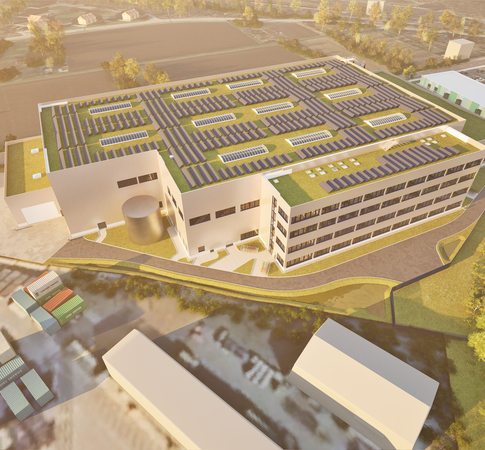
Factory and General Planning for a Site Expansion to Support the Pre-Assembly of Helicopter Airframes

Strategic Development of an International Production Network

Future-Oriented Site Development for the Production of Hygiene Solutions