Procurement potential analysis | Realising potential savings
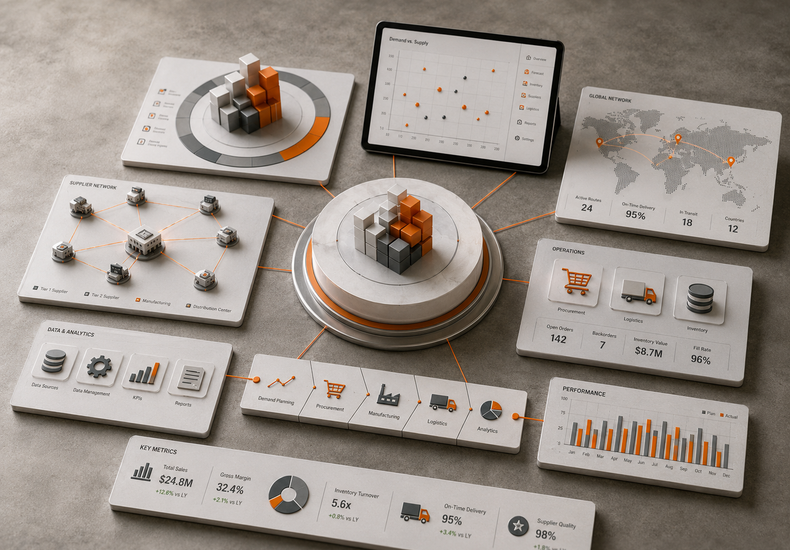
[Translate to English:] Technisch-cleanes Headerbild zur Potenzialanalyse Einkauf mit Datenvisualisierungen, Einkaufskennzahlen, Roadmap und analytischem Workspace.

Procurement Potential Analysis: Identifying and Realising Savings Potential

Improving procurement processes & preparing for implementation

 Request a potential analysis for procurement

Logo mit Wortmarke „voss“; Schriftzug in kräftigem Magenta, fette serifenlose Kleinbuchstaben, gleichmäßige Strichstärke. Platziert auf weißem Hintergrund, zentriert, ohne weitere grafische Elemente oder Symbole.
Blaues Wortzeichen „GEA“ bildet ein stilisiertes Logo; eine horizontale Linie verbindet E und A und schneidet das E; weißer Hintergrund mit zentrierter, klarer Darstellung.
Wortmarke „OLYMPUS®“ in blauen Großbuchstaben, zentriert dargestellt; darunter eine durchgehende gelbe Linie mit kleinem weißen Punkt rechts, auf weißem Hintergrund.

When does a potential analysis in procurement have the largest leverage?

Rising costs, volatile supply markets and increasingly complex supplier structures are putting greater pressure on procurement and the supply chain. It is often clear that there is potential for improvement. However, it remains unclear in which product groups, supplier relationships and processes this potential actually lies, and which measures are effective in the short term or make strategic sense.

Metroplan creates this transparency through a data-driven potential analysis in procurement. We analyse spend, product groups, the supplier base, processes, organisation and the digital system landscape, and translate the results into a prioritised basis for decision-making: featuring quantified savings potential, robust assumptions and an actionable programme of measures.

The potential analysis in procurement is particularly relevant when cost programmes, established supplier structures, decentralised demand, maverick buying, digitalisation initiatives or location changes require a robust basis for decision-making.

Request a procurement potential analysis

Metroplan Insights

Ensuring transparency regarding expenditure, suppliers and product categories

We do not view procurement in isolation, but as part of the overall value stream: from demand through sourcing, ordering and service delivery to invoice verification and KPI management. This not only highlights opportunities for optimising prices and terms, but also reveals potential for improvements in structure, processes and organisation, which increase the value contribution of procurement in the long term.

Expenditure structures and the Spend Cube

We organise order, accounts payable, contract and product group data to create a reliable overview of expenditure. This reveals the purchasing volume tied up in specific product groups, companies, sites and supplier relationships, and highlights where the greatest potential for savings lies within the procurement function.

Supplier base and opportunities for consolidation

We assess the existing supplier landscape in terms of volume, dependencies, performance, terms and conditions, risks and opportunities for consolidation. This yields specific starting points for supplier consolidation, tendering, dual sourcing, contract standardisation or the further development of strategic partnerships.

Potential in terms of price, demand and specifications

Opportunities for savings do not arise solely from better prices. Often, the relevant levers lie in the origin of demand, product variety, specifications, batch sizes, payment terms, service levels or the bundling of recurring requirements. We assess these levers in terms of their potential for savings, feasibility, dependencies on specialist departments, risk and the changes required to day-to-day operations.

Processes, Organisation and Digitalisation

We analyse how requirements are raised, tenders are conducted, purchase orders are initiated, approvals are managed, invoices are processed and suppliers are evaluated. The focus is on process costs, maverick buying, roles and responsibilities, system disconnects, master data quality and the maturity level of S2C, P2P and reporting processes.

A 5-step approach to potential analysis in procurement

  1. Step 1

    Define the target vision and analytical focus

    At the outset, we align on objectives, level of detail, relevant categories, locations, entities, data sources, and decision-making requirements. This creates a clear framework for the analysis, quality of results, timeline, and required level of data depth.

  2. Step 2

    Structure the data foundation and establish spend transparency

    We clean, classify, and validate available procurement data from ERP, accounts payable, purchasing, contract, and material group data. We fill data gaps through interviews, document reviews, and workshops with procurement and the relevant business functions.

  3. Step 3

    Assess categories, suppliers, and processes

    Based on this foundation, we analyze category structures, supplier portfolios, pricing and commercial terms, as well as process and organizational patterns. We combine top-down perspectives with bottom-up insights into contracts and specific business requirements.

  4. Step 4

    Identify and quantify potential

    The identified potential is assessed based on impact lever, value, effort, risk, and feasibility. Where possible, we quantify the potential in euros, percentage impact, or process KPIs.

  5. Step 5

    Prioritize measures and prepare implementation

    Finally, we translate the results into a structured action program with quick wins, strategic initiatives, responsibilities, decision requirements, dependencies, and an implementation roadmap.

The results of your procurement potential analysis

  • Transparency regarding expenditure by product group, supplier, location and company
  • Assessment of potential savings in direct and indirect procurement
  • Identification of maverick buying, process costs, system disconnects and master data gaps
  • Potential matrix based on impact, effort, risk and feasibility
  • Action sheets for prioritised levers and quick wins
  • Roadmap for quick wins, tenders, supplier development, process optimisation and digitalisation
  • Decision-making documentation for management, procurement and line organisations

Request a procurement potential analysis

Building trust through projects

Our success stories

Supply Chain
Consumer & Food

Benchmarking and Optimization of Fulfillment Conditions in E-Commerce

Comprehensive Realignment of Supplier Relationships and Fulfillment Processes to Increase Efficiency and Service Quality in Online Business.

To reference
Benchmarking and Optimization of Fulfillment Conditions in E-Commerce
Gesicht einer Person in Nahaufnahme; Finger tragen weiße Gesichtscreme auf die Wange auf; geschlossene Augen, leichtes Lächeln, glatte Haut, weiches Seitenlicht, Fokus auf Hautpflege-Routine.
Logistics Planning, Supply Chain
Life Science

Strategic Alignment and Planning of a New Central Warehouse

Network Optimization and Planning of a New Central Warehouse to Expand Capacity.

To reference
Strategic Alignment and Planning of a New Central Warehouse
Logistics Planning, Supply Chain
Retail & (E-)Commerce

Design of a logistics network to supply a textile retailer across Europe

Modernisation of logistics processes through the planning of network and intralogistics systems, as well as the tendering of technology, LDL and WMS.

To reference
Design of a logistics network to supply a textile retailer across Europe

For which companies is a potential analysis in procurement beneficial?

A potential analysis in procurement is most beneficial when decisions are no longer to be based on individual opinions, established routines or incomplete data. Typical starting points are:

Earnings pressure and cost reduction programs

Earnings pressure and cost reduction programs

Procurement is expected to make a measurable contribution to value creation in the short term – for example through cost reduction programs, margin pressure, working capital targets, or earnings improvements.

Established supplier and category structures

Established supplier and category structures

Historically established supplier relationships, inconsistent terms and conditions, heterogeneous categories, or incomplete master data make procurement management more difficult.

Decentralized procurement and maverick buying

Decentralized procurement and maverick buying

Business functions place orders outside defined processes, contracts, or framework agreements. This leads to avoidable costs, a lack of transparency, and lower compliance.

High indirect procurement volume

High indirect procurement volume

Particularly with indirect spend, numerous suppliers, and decentralized purchasing, potential exists in bundling, standardization, process discipline, and transparency.

Digitalization, e-procurement, or SAP S/4HANA

Digitalization, e-procurement, or SAP S/4HANA

Before introducing new systems, role models, or digital processes, the potential analysis shows which data, responsibilities, and processes should be clarified first.

Growth, site consolidation, or M&A

Growth, site consolidation, or M&A

When procurement volumes, supplier portfolios, and category structures need to be consolidated, the analysis creates a comparable and robust basis for decision-making.

Making informed decisions with the procurement potential analysis

A potential analysis in procurement is the right approach when companies wish not merely to speculate about opportunities for savings and improvements, but to assess them reliably and implement them in a targeted manner. To this end, Metroplan combines procurement expertise with experience in supply chain management, logistics and implementation: we create transparency regarding expenditure, product groups, suppliers, processes and organisation; we evaluate realistic levers within your specific context; and we translate the results into a prioritised programme of measures. In this way, procurement data is transformed into a concrete implementation plan – ranging from tenders and supplier consolidation, through product group strategies and process optimisation, to e-procurement, reporting and organisational development.

Request a procurement potential analysis


FAQs: Procurement Potential Analysis

What does Metroplan mean by a ‘potential analysis’ in procurement?


Metroplan defines this as a structured, data-driven analysis of expenditure, product categories, suppliers, processes, organisation and the IT infrastructure. The aim is to identify opportunities for economic and organisational improvement and to translate these into prioritised actions.

What potential savings in procurement are being investigated?


Typical levers include potential savings on price and terms, bundling of requirements, adjustments to specifications, supplier consolidation, tendering, process cost reduction, reduction of maverick buying, and improvements in product group management, reporting and digitalisation.

What data is required for the analysis?


Typically, we use data relating to orders, accounts payable, contracts, suppliers and product groups. In addition, process information, organisational structures, guidelines, existing KPIs and interviews with the procurement department and line organisations are helpful.

Even if the data set is not complete or consistent at the outset, it is still worthwhile to begin a potential analysis. It is important to highlight data gaps, document plausible assumptions and validate critical points in a targeted manner with procurement, IT and business units.

How long does a procurement potential analysis take?


A compact Quick Check can provide initial reliable findings within a few weeks. A more comprehensive potential analysis often takes four to eight weeks, depending on the data available, the company’s structure, the number of sites and the product groups under consideration. The agreed focus of the analysis is crucial.

Does Metroplan also provide support with implementation?


Yes. On request, Metroplan supports the implementation of prioritised measures, such as product group strategies, tenders, supplier consolidation, organisational changes, process optimisation, KPI management or digitalisation initiatives in procurement.

Contact

Your contacts

Scroll to top