Material Flow Planning
Efficient processes and optimized goods flows for your intralogistics operations
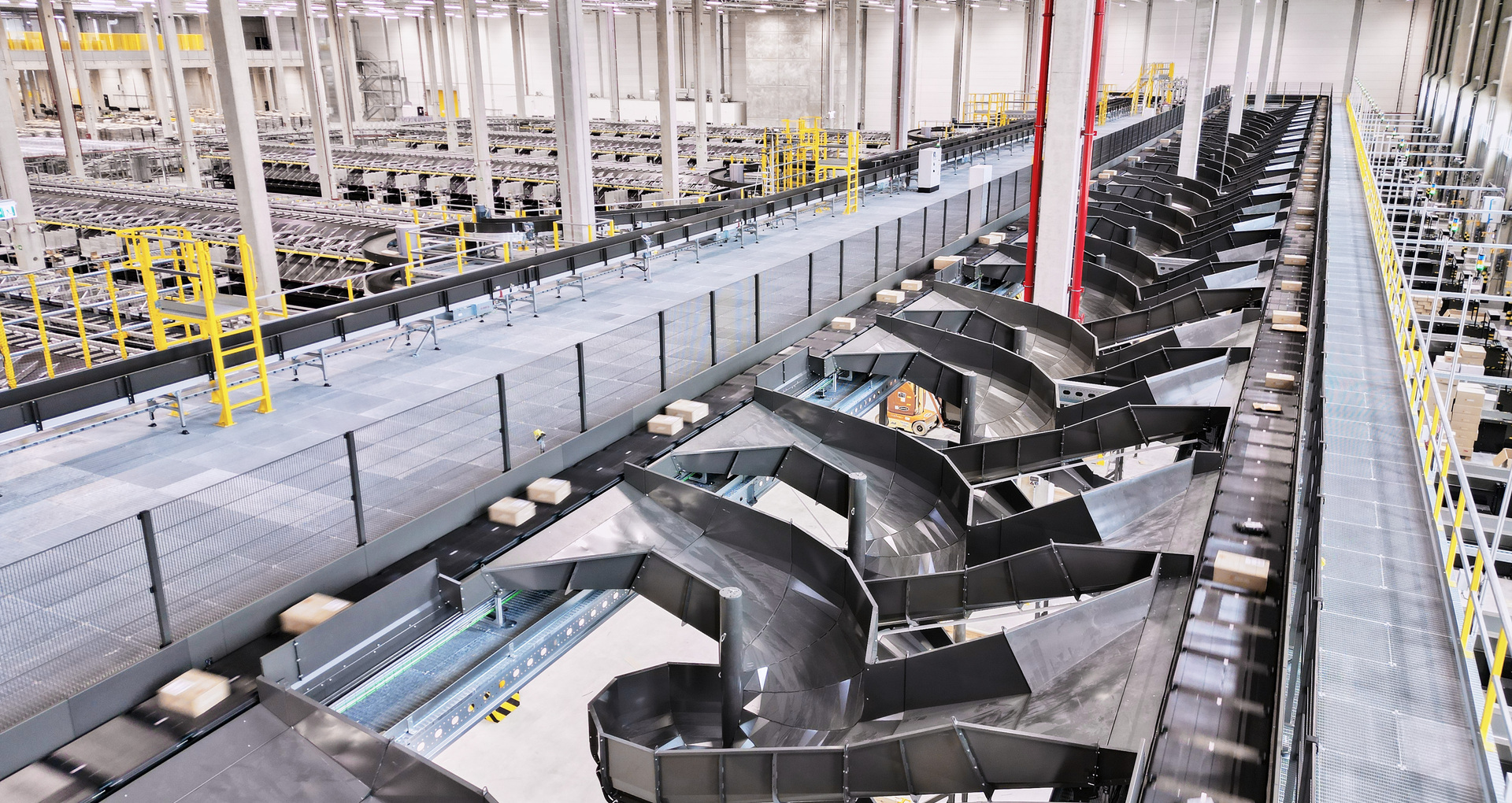
Efficient processes and optimized goods flows for your intralogistics operations





At Metroplan, we develop robust material flow concepts that reduce the existing complexity of your operations and improve the efficiency of your intralogistics system. Material flow planning focuses on designing efficient transportation, movement, and process flows within your logistics system.
Our objective is to eliminate bottlenecks, avoid unnecessary process steps such as repeated handling, and ensure seamless integration with your production and warehousing processes.
While warehouse planning defines the structural and spatial framework, material flow planning focuses on optimizing all transportation and movement processes within the system. It encompasses the analysis, design, and optimization of all material and goods flows within intralogistics. It therefore provides the foundation for efficient, scalable logistics processes and the subsequent layout and system design.
Our planning is based on reliable data and sound analysis. During the concept design phase, we create transparency regarding volume structures, movement data, and process requirements, establishing the foundation for a viable system design.
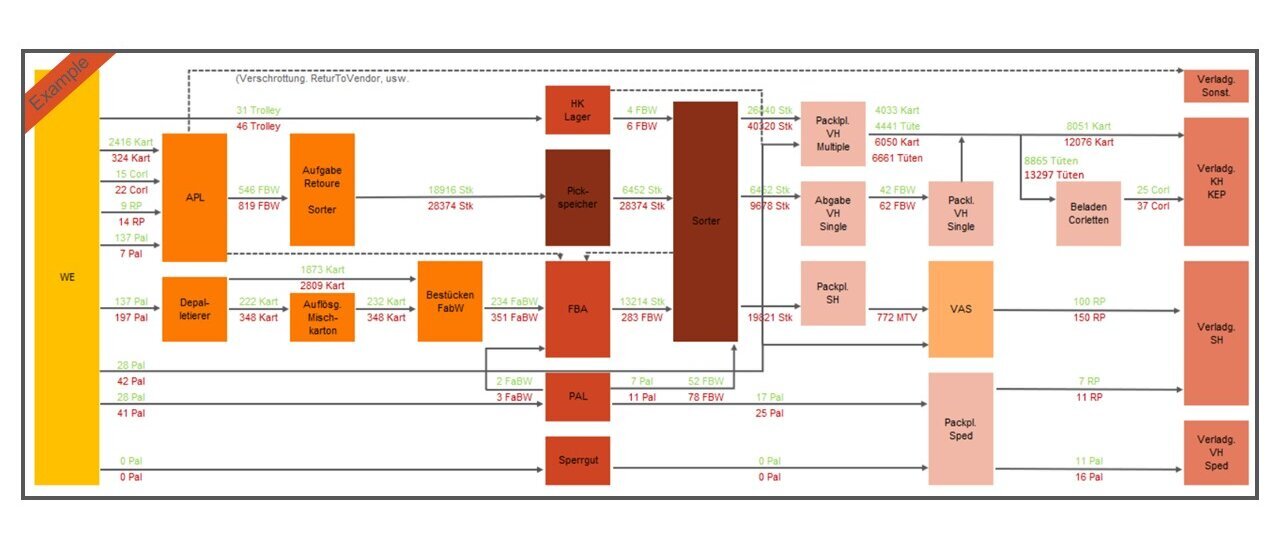
Data analysis and material flow diagrams: We collect and structure your inventory and movement data and use it to develop a consistent representation of the material flows. On this basis, we create material flow diagrams that transparently illustrate all relevant flows and structures in both the current and target states. Volumes, frequencies, and inventory requirements are presented in a clear and traceable format.
Simulation and bottleneck analysis in material flow planning: We analyze future material flows within an integrated overall model and assess throughput, capacity utilization, and potential bottlenecks at an early stage. This creates a robust foundation for dimensioning the logistics processes.
Design of material handling systems: We define the required material handling components and optimize the transportation links among warehouse, production, and functional areas. The objective is to establish a continuous, stable, and high-performing material flow.
Clear visualization of material flows and processes: As part of our integrated concepts, we visualize process and material flows, space requirements, and technical equipment in informative 2D and 3D representations.
Automating individual subprocesses in isolation often results in stand-alone solutions with limited future readiness. As part of material flow planning, we therefore take an integrated approach to determining where automation can deliver the greatest benefit at a reasonable level of investment.
From the outset, we design material flows to incorporate both current requirements and future technological developments within a consistent overall concept, allowing new technologies to be integrated seamlessly at a later stage.
What is material flow planning?
Material flow planning is the structured design and optimization of all goods and material movements within a logistics system. It analyzes how materials flow through your company, from receiving through warehousing and production to shipping.
The objective is to design processes so that materials can be transported without interruptions, detours, or unnecessary handling. The focus is on coordinating processes, transportation routes, and technical systems while ensuring stable and high-performing overall operations
Why is material flow planning important?
Material flow planning has a direct impact on the efficiency, cost structure, and performance of your intralogistics operations. Even minor weaknesses in the material flow can cause bottlenecks, waiting times, or unnecessary transportation throughout the entire system.
Systematic material flow planning addresses these issues by creating process transparency and revealing optimization potential. This makes it possible to:
The result is more stable, controllable, and cost-effective logistics processes that can be adapted flexibly to future requirements.
Contact us

Managing Partner

Business Development Manager

Managing Director

Managing Partner


