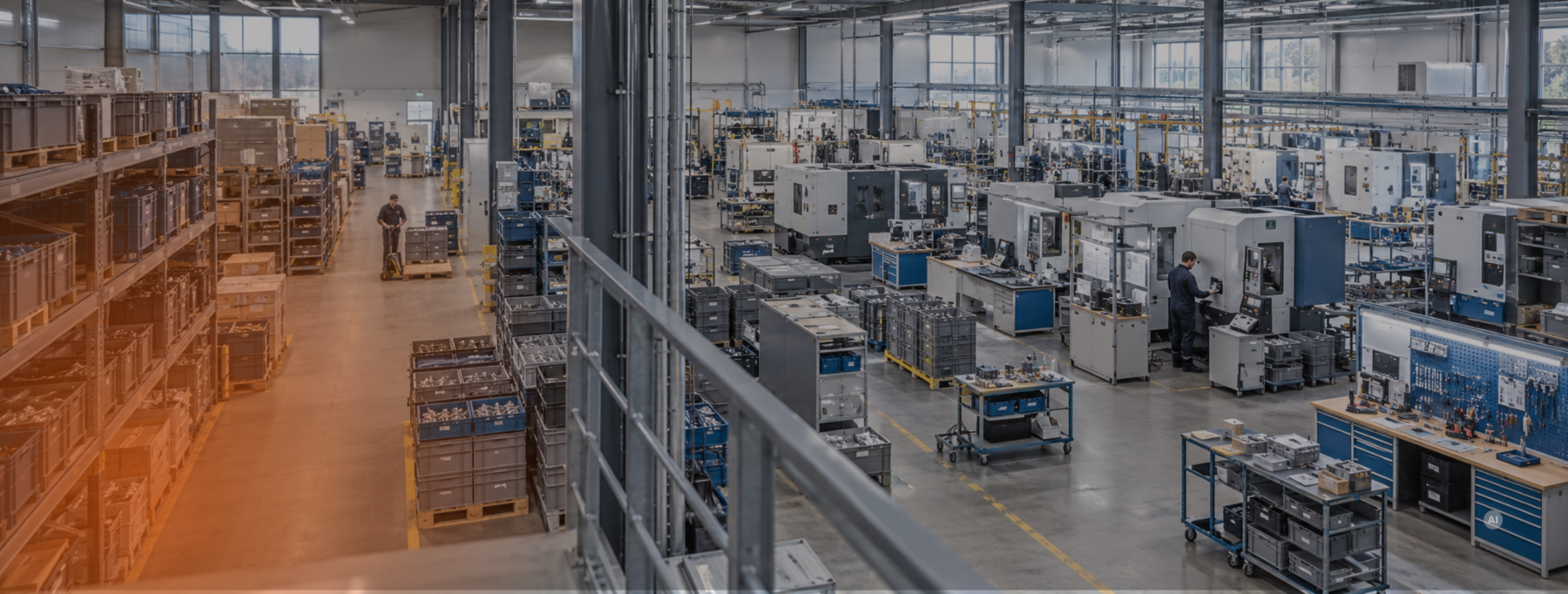
High Inventory Levels, Yet Still Missing Parts
Companies often hold large inventories to safeguard material supply for production. In practice, however, a high overall inventory level does not automatically mean that the right materials are available. Missing parts can still occur regularly, delaying or interrupting production orders.
The reason is often that total inventory says little about whether the materials critical to production are actually available. Some materials may sit in storage for long periods, while even a small shortage of a critical component can seriously disrupt production. Quality inspections, missing documentation, or internal approval processes can also prevent materials from being used immediately, even when they are physically on site.
The question, then, is which inventory is truly needed for reliable production supply and how procurement processes should be adapted to the demand patterns of different materials.
Analyze the Causes of Material Shortages
Before changing inventory parameters or procurement strategies, first identify which materials repeatedly cause shortages and why. The following questions are particularly relevant:
- Which materials regularly cause supply bottlenecks?
- How often do suppliers miss agreed delivery dates?
- Which suppliers are affected?
- How long is the actual replenishment lead time?
- Which internal processes further delay material availability?
In addition to late deliveries, the analysis must consider internal causes such as late changes to requirements, missing specifications, pending quality approvals, and unclear responsibilities throughout the procurement process.
Only by connecting material shortages with inventory levels and the causes of disruptions can you identify the actual bottlenecks and develop targeted improvements.

Manage Materials According to Their Requirements
AnalysisClassify Materials
A structured assessment of materials provides the foundation for inventory and procurement strategy. An ABC/XYZ analysis classifies materials by consumption value and consumption patterns.
Security of supply also depends on:
- How critical the material is to production
- Replenishment lead time
- Supplier risk
- Whether the material can be substituted
This shows which materials need closer attention and where standardized processes are sufficient.
ProcurementAdapt Procurement Processes
The procurement strategy should reflect the material group:
- Standard materials: Often suitable for automated replenishment, framework agreements, or simplified materials planning rules.
- Critical materials with long lead times or single-source dependencies Require closer monitoring and targeted safeguards.
RiskSet Safety Stock Levels
Safety stock protects against uncertainty in demand and replenishment. Setting levels according to risk requires consideration of:
- Fluctuations in demand
- Replenishment lead time
- Variability in delivery times
- How critical the material is to production
- The target service level
This makes it possible to protect the supply of critical materials without building unnecessarily high inventory for less critical items.
ProcessesCoordinate Internal Activities
Replenishment is complete only when the material is available for production.
Delays can arise during:
- Incoming goods inspection
- Quality approval
- Documentation
- Internal delivery of materials
These delays can prevent materials from reaching the point of use when they are needed.
Ergebnis
Allocate Inventory According to Risk
The result is a differentiated approach to materials management: Procurement processes, safety stock levels, and internal activities are designed around each material’s characteristics and supply risks.
Assess the Full Financial Impact
Analyzing procurement processes and inventory, then introducing improvements, should be guided by their financial value. Linking each measure to its expected benefits makes the proposed changes easier to understand and assess. Potential effects include:
- Less capital tied up in inventory
- Lower storage and process costs
- Fewer production interruptions caused by missing materials
- Less need for special transportation and urgent purchases
- Greater material availability
To quantify the benefits, production interruptions caused by missing materials can be analyzed and assigned to their respective causes. This makes it possible to estimate which interruptions could have been avoided through better procurement processes, adjusted inventory parameters, or improved internal activities.
Reduce inventory costs and improve supply reliability through targeted procurement logistics
High inventory levels are not a reliable indicator of supply reliability. What matters is protecting the supply of materials that are critical to production.
Combining root cause analysis, procurement strategies tailored to each material group, risk-based safety stock, and coordinated internal processes makes it possible to reduce unnecessary inventory while maintaining high material availability.
The goal is therefore neither to increase nor to reduce inventory across the board. It is to determine the stock needed for each material group and establish a procurement process that fits its requirements.
Procurement Management with Metroplan
Metroplan’s consultants analyze materials and supplier conditions, assess the inventory coverage targets and safety stock required, and work with your departments to develop suitable procurement rules. We support the transition into day-to-day procedures. Necessary ERP changes are handled with systems specialists or suitable partners.
You can find more on specific solutions on our Procurement Management for Manufacturing Companies page.
You can find help on choosing a procurement logistics consultancy in our decision-making guide
About the Authors


Contact
Contact

Simon Vehof
Manager Business Development

Dr. Mark Schmidt
Consultant

