Logistics as part of the product
From the customer’s perspective, the performance of your logistics is an integral part of the product and therefore a key success factor. Product-related services such as short lead times, competitive costs, compliance with customer-specific delivery requirements and quality standards, as well as value-added services, enhance the attractiveness of products in both B2C and B2B markets.
Challenges when investing in logistics services, particularly automation
- Developments in business areas are difficult to predict
- Proximity to customers is increasingly hard to achieve due to limited space, high competition for land and scarce availability of labor
- Investments in automation typically generate ROIs over 5–10 years
- Shortening technology cycles of 3–5 years often lead to hesitation and the hope for future solutions
Design principles for manageable investment risks:
To stay ahead of the curve, Metroplan designs logistics systems for customers along the entire value chain based on forward-looking principles:
- Flexibility – adaptable processes, hardware and software
- Scalability – adjustment to volatile volumes (both upward and downward)
- Resource autonomy – reduced dependency on scarce resources such as labor and large-scale floor space; enabling demand-driven investments at high utilization levels
- “No-regret moves” – decisions that remain valid even when requirements change or new technologies emerge
Learn more about our logistics plannung services
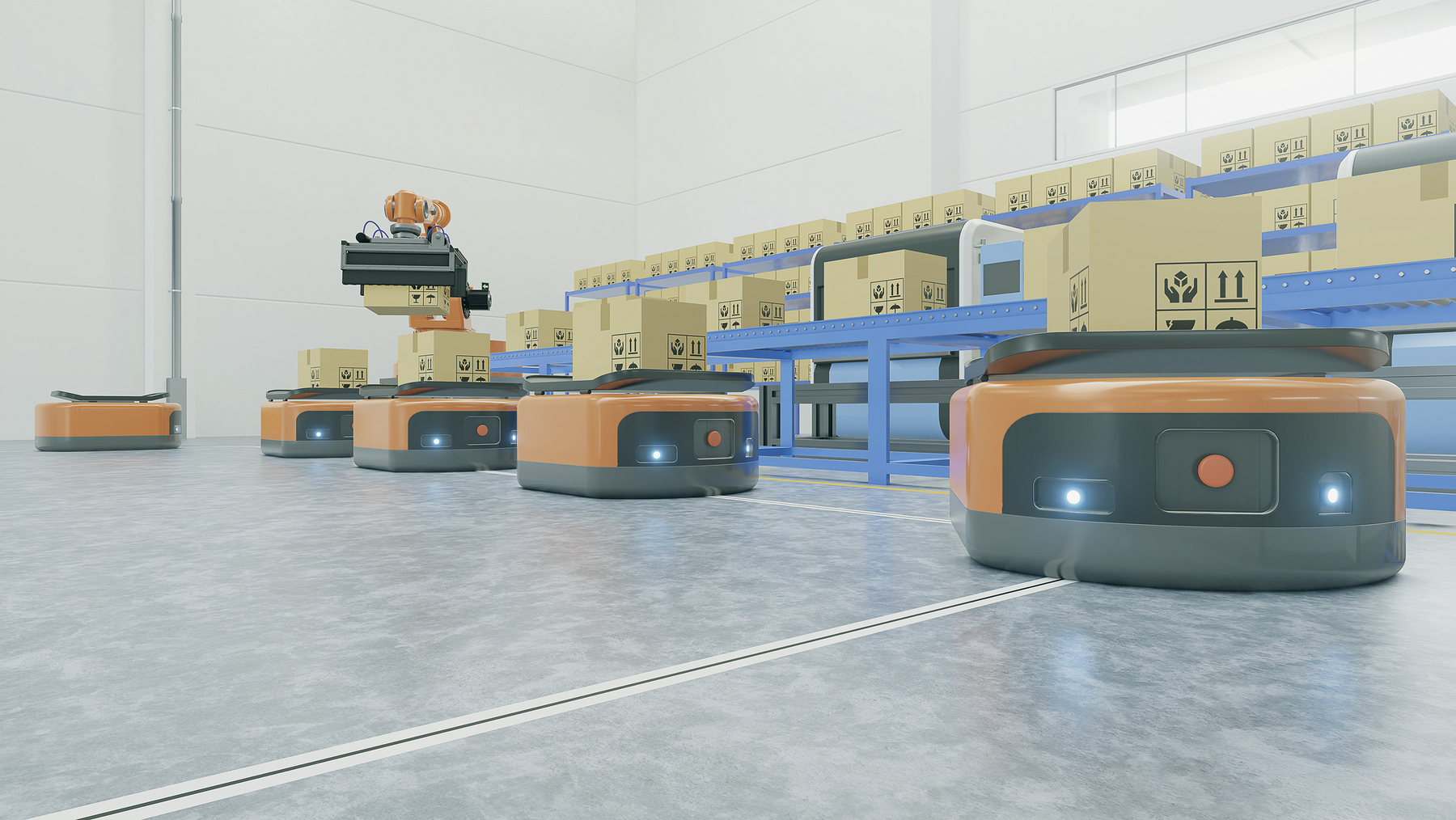
Autonomous mobile and static robots as game changers
With flexible robot fleets, the design focus shifts away from complex conveyor technology toward the provision of flexible operating areas (ground floor, grid layouts) in which fleets of autonomous units can operate independently. The resulting decoupling of storage capacity and throughput enables true scalability. Robotics-based design allows solution configuration instead of rigid technology selection, leading to short implementation times. Investment efficiency is achieved through process consolidation rather than specialization, and through OPEX-based models instead of CAPEX, such as Robotics as a Service (RaaS), which reduce utilization risk.
Conclusion for your logistics project
The success of logistics depends on how well it supports the core product and the customer promise. Modern, robotics-based technologies provide the flexibility and performance required to continuously adapt to customer requirements and maintain long-term competitiveness.