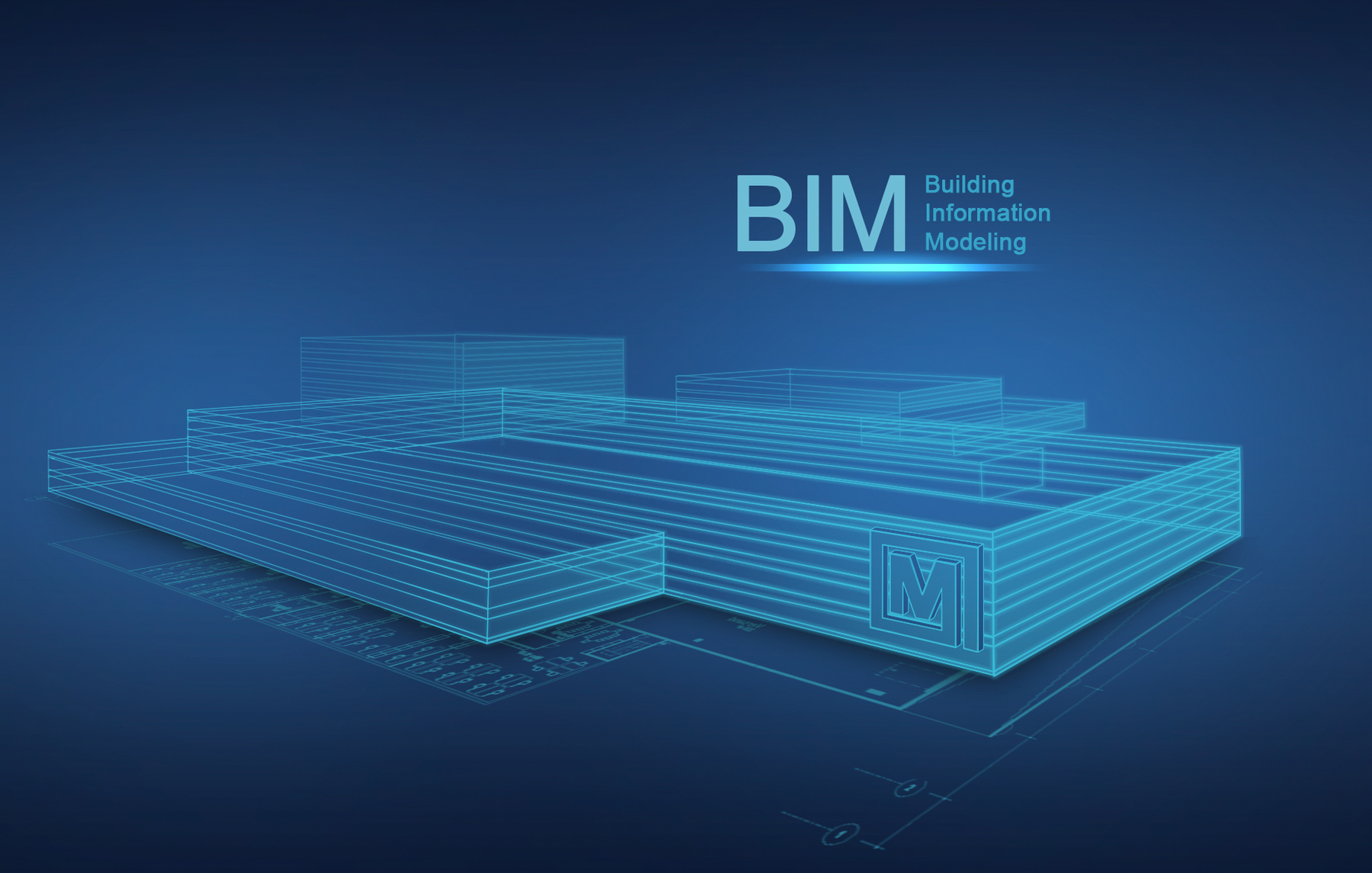
Our planning and realization in BIM has five decisive advantages for us, our customers and future users:
1. Leaner Coordination Channels
With BIM, all project partners have access to the information relevant to them. This makes it easier to carry out preliminary planning and rescheduling. The digital twin of a production property developed from the Bim model in the execution phase digitally maps the real building and enables analyses of material consumption, costs and construction time, for example. It is typically used in the usage phase, for example in facility management for maintenance and optimization tasks. In the past, rescheduling during construction took up a lot of time: Plans had to be adjusted, sent back and forth and approved by those involved. With BIM, this is much quicker, as the well-prepared interfaces in the model facilitate coordination and alignment.
2. Better Cost Control, Increased Efficiency During Operation
Thanks to detailed planning and simulation, costs can be better predicted and controlled, allowing potential budget adjustments to be identified at an early stage. Our experience shows that overall project costs can be reduced thanks to the efficiency gains achieved through the use of BIM. This is primarily due to the leaner processes and more economical use of materials compared to traditional construction planning and execution.
The use of the digital model as a comprehensive database with all building information also makes it easier for facility management to coordinate and control maintenance, repair and servicing work during operation. In addition to the efficiency gains during the planning and construction phase, BIM also offers considerable benefits during the building's life cycle.
3. BIM as a Tool for Planning from the Inside Out
BIM fits perfectly with our concept of planning production and logistics halls from the inside out. This means that the processes are first simulated in the model, including the plant technology, the number of workstations required, etc. The future building requirements are derived from this, such as hall size, floor plans, necessary load-bearing capacities and the dimensioning of the building technology and fire protection.
The 3D model also allows clients and users to get an accurate picture of the future property before construction begins. A “virtual tour” with 3D glasses gives them a realistic picture of the building. If they have any change requests, these can usually be implemented without any problems.
4. Improved Collaboration Between Project Participants
BIM enables seamless collaboration between the different trades. With 3D modeling, potential conflicts between different trades can be identified and resolved on screen, resulting in fewer construction errors and rework.
Thanks to BIM, the degree of prefabrication can be increased because it is clear which parts will be installed where. This also enables greater use of just-in-time assembly, provided that good pre-planning is in place. Delivery logistics can also be made more efficient, which optimizes construction processes and improves the coordination of resources. This not only reduces construction time, but also noise emissions and other disturbances for potential residents.
5. Sustainability: BIM Enables Energy Analyses
BIM can be used not only to simulate the actual construction and construction progress, but also to determine the energy requirements, ecological footprint and environmental impact in advance. In addition, BIM enables the simulation of microclimates, solar analyses to optimize lighting and the planning of PV and solar utilization in order to develop sustainable and energy-efficient building concepts.
BIM is of great importance for a future comprehensive refurbishment or demolition of the property, as it enables a holistic view of measures and minimizes informational shrinkage, provided it is implemented well. While site managers are usually aware of what has been used where, BIM opens up additional potential for recording and quantifying recyclable building materials. This makes it easier to identify, separate and return materials to the cycle, thus contributing to a more sustainable, resource-conserving use of materials.
Would you like to find out more about BIM?
If you have questions about our BIM applications, meet us at the “Construction Summit” in Hamburg on 5 and 6 March 2025 - digitization in the construction industry will be the central topic of the summit. We will be happy to advise you on this at our Metroplan stand!
Contact
Contact

Dr. Manuel Schrapers
Managing Partner - General Planning

Frederik Simonet
Business Development

