Factory Planning in the Security and Defence Industry

Industrialisation Strengthening Global Security and Defence Policy

Request Factory Planning

Outlook
& Way
Forward

>500bn USD
Forecast market volume in
2026 (USD)
>7%CAGR
Average annual growth rate,
2026–2034
5%of GDP
NATO agreements to increase
defence spending by 2035

Production Capacity as a Pillar of Global Security and Defence Policy

Why expanding industrial production capacity is becoming a strategic lever.

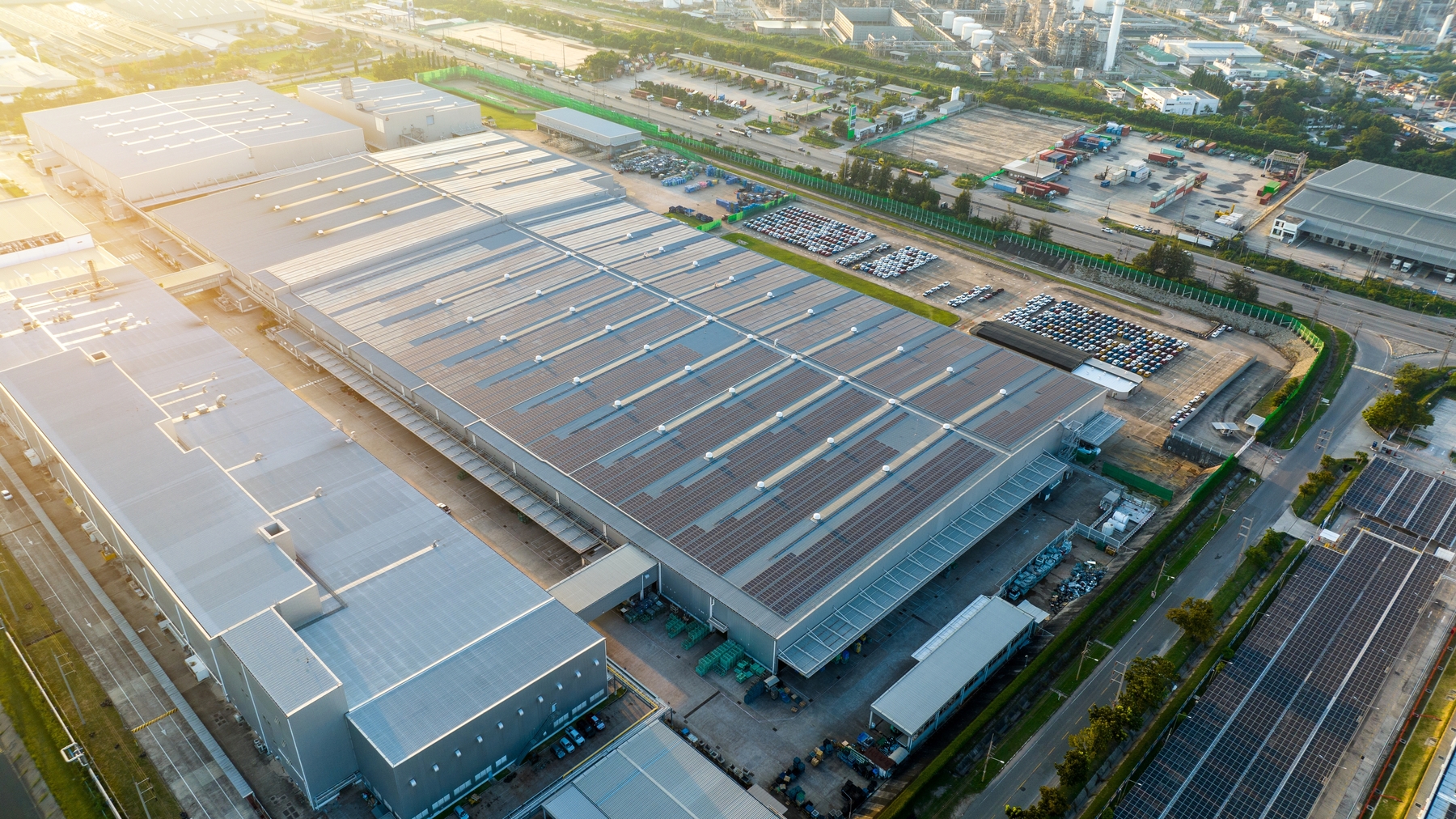
The defence industry is entering a period of profound change. In the past, investments in security- and defence-related infrastructure were handled very unevenly across the globe. While some regions faced years of underinvestment, others pursued targeted rearmament. Today’s geopolitical developments and shifting power structures are placing all stakeholders under significant pressure to act.As a result, companies involved in security-critical production and their supply chains are required to respond quickly and provide production capacities on a scale not previously seen. National programmes and multinational commitments, such as the NATO target to increase defence spending to 5 percent of GDP by 2035, are already accelerating a wide range of initiatives. This raises a central question for manufacturers in the security and defence sector:

Which strategic levers must now be addressed by defence companies to enable sustainable capacity expansion?

  • Building resilient and sovereign supply chains
  • Developing flexible and scalable factories
  • Expanding or reorganising existing production environments
  • Increasing the level of industrialisation and automation
  • Ensuring operational excellence under security-critical conditions
The excellent defence factory integrates sovereignty, resilience and scalability into a single, efficient production system.
Matthias Göke

Matthias Göke // Managing Partner - Metroplan

Excellent Factories for the Security and Defence Industry

Aviation Systems
  • High floor-space requirements per unit driven by hangar and dock design
  • Layout implications resulting from safety and certification zones
  • Process and material flow logic shaped by work-station-driven operations

In addition to designing OEM factories, we also support you in managing the complexity arising from increasing unpredictability in MRO operations, ensuring stable and resilient operational environments.

Design production and MRO environments

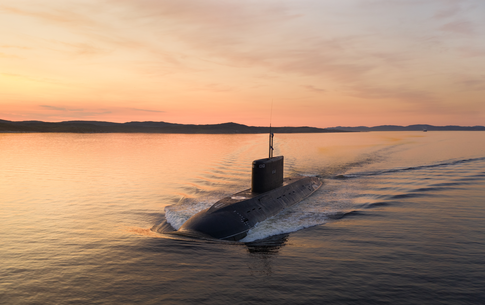
Naval Systems
  • Site-bound infrastructure as the primary constraint, limiting flexibility in layout design
  • Modularisation through block and section construction as well as assembly structures
  • Increasing access restrictions during ongoing assembly process 

Maritime production environments are characterised by high structural requirements that limit flexibility and require complex, tailored solutions across the entire facility.

Master maritime requirements

Land & Combat Systems
  • Variable combinations of series and variant production
  • High floor-load capacities due to product dimensions
  • Floor-space efficiency influenced more by material flow than by workstation design

Scalability and ramp-up capability are defining characteristics of successful factories for land and combat systems. At the same time, robust production environments are essential.

Scale production for land and combat systems

Our Use Case-Designer

Metroplan as Your Partner for Your Defence Production

Use our Use Case Designer to strategically define your field of action around the excellent factory.

Please fill in all mandatory fields!
Please select at least one of the mandatory fields!
In Which Defence Sector Do You Operate
Please select one of the mandatory fields!
What Is Currently Driving the Highest Operational Pressure?
Please select one of the mandatory fields!
What Is Currently Driving the Highest Operational Pressure?
Please select one of the mandatory fields!
What Is Currently Driving the Highest Operational Pressure?
What Is the Main Operational Challenge at the Factory Level?
Please select one of the mandatory fields!
Excellent Aviation Defence Production Is Characterised by…
Excellent Naval Defence Production Is Characterised by…
Excellent Land & Combat System Production Is Characterised by…
Please select one of the mandatory fields!
Excellent Supply Chains are Characterised by…
Realise Excellent Aviation-Defence Production Now.
Realise Excellent Naval-Defence Production Now.
Realise Excellent Land & Combat System Production Now.
Realise an Excellent Supplier Environment for Defence Production.
PreviousNext

Supply chains in the security and defence industry

Resilient Supply Chains Safeguard Production Capability

As security-critical production capacities are expanded, upstream processes are increasingly coming into focus. High-performance manufacturing depends on the stable and predictable availability of materials and purchased components. Particularly in security-relevant industries, it is no longer sufficient to rely on short-term demand planning and reactive ordering processes.Disruptions within the supply chain have an immediate, success-critical impact on production performance, making inbound logistics a decisive competitive advantage.

Against this backdrop, aligning the supply chain becomes just as critical as designing the production environment when developing an excellent factory:

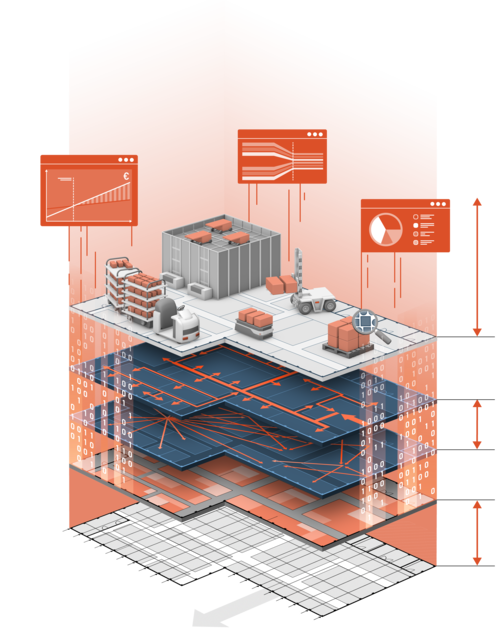
  • Robust and scalable supply chain structures along the value stream
  • End-to-end (E2E) transparency across all material flows
  • Balanced inventory management between security of supply and economic efficiency
  • Scenario-based planning and risk-management to safeguard production capability
  • Clean synchronisation of inboundlogistics, intralogistics, production and outboundlogistics

Industrialisation of the defence industry

Factory Planning in the Security and Defence Industry: Best Practices and the Role of Logistics

Many products in the military domain follow the principles of discrete manufacturing, a production paradigm that has been systematically optimised for efficiency and scalability in other industries over recent years. In particular, the automotive industry and leading companies in machinery and plant engineering have developed structures and processes designed for maximum operational performance.Looking beyond one’s own industry therefore offers significant potential, while fully recognising that specific requirements such as production volume scenarios, material characteristics and process requirements play a decisive role in determining how best practices can be adapted.

Based on our experience, the following manufacturing processes are particularly well suited for best-practice transfer to the defence industry.

Machining

Joining

Assembly

Why Future-oriented Logistics Concepts are in Defence Factories are Becoming a Security-Critical Factor.

On the one hand, the shortage of skilled labour is reducing the availability of qualified personnel for production logistics activities. On the other hand, geopolitical and security policy constraints are increasingly narrowing the range of options when selecting sites for factories producing security-critical infrastructure. As a result, it becomes a critical success factor to ensure a reliable, competitive and scalable supply of materials to production, even when site decisions are predetermined, and to define the appropriate level of automation tailored to each individual factory.

Develop a future-oriented logistics concept

Trust established through project experience

Selected Success Stories

Maintenance, Repair and Overhaul (MRO) capacity build-up with specific requirements

A key issue in the MRO sector is the maintenance of aircraft engines. When a new engine is commissioned, standardised maintenance intervals are defined, which are determined taking into account operating hours, take-off and landing operations, and technical conditions in order to reliably ensure performance during operation.

Explore MRO capabilities
Factory Planning, General Planning
Aviation & Shipping

Factory and General Planning for a Site Expansion to Support the Pre-Assembly of Helicopter Airframes

Construction of a new 14,000 m² production building with office space at the Airbus Donauwörth site, holistically planned by Metroplan with optimised production, logistics and space structures.

To reference
Factory and General Planning for a Site Expansion to Support the Pre-Assembly of Helicopter Airframes
Factory Planning, General Planning
Defence

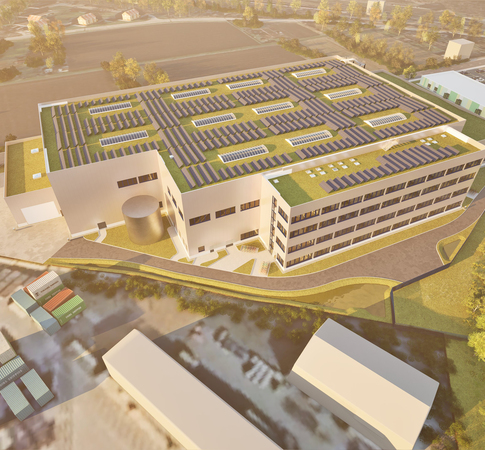
Holistic Factory Planning for a New State-of-the-Art Battery Factory

Comprehensive factory planning for the construction of a state-of-the-art battery plant with high complexity in material and process requirements.

To reference
Holistic Factory Planning for a New State-of-the-Art Battery Factory

Metroplan’s Defence Expertise at a Glance

How can Metroplan support the build-up and expansion of defence capacities?

  • Development of network and site strategies
  • Support in make-or-buy decisions
  • Establishment of Sales and Operations Planning (S&OP) structures
  • Integrated planning across factory, logistics and general planning disciplines
  • Design of production planning and control systems
  • Optimisation of manufacturing and logistics processes
  • Digitalisation of shop-floor management

What defence experience can we draw on?

In the recent short- and mid-term past, projects have been delivered across security-critical maintenance, assembly and production processes within the defence sector. Project scopes ranged from the stabilisation of existing capacities to the development of new, future-ready structures.

Building on this experience, and combined with projects from adjacent areas of discrete manufacturing such as aviation, maritime, rail and automotive, Metroplan develops robust solutions for defence-specific production and MRO processes, supported by high-performance production logistics.

Typical project scope includes:

  • Analysis of existing production and maintenance structures
  • Process and layout concepts for security-critical manufacturing and MRO environments
  • Planning of value-stream-oriented material flow and logistics concepts
  • Assessment of existing manufacturing capabilities and make-or-buy scenarios
  • Investment evaluations for buildings, equipment and logistics infrastructure

What defines a successful collaboration for us?

  • Integration of client know-how into the planning project
  • Hybrid working formats with interactive workshops
  • End-to-end consideration of capability, technology and process
  • Harmonisation of standardisation and flexibility within a single system
  • Implementation of a single source of truth within the planning approach

Contact

Your points of contact

Simon Vehof

Manager Business Development

Matthias Göke

Managing Partner - Factory Planning

Scroll to top