Smart Factory planen: End-to-End Integration, aber wie?

Smart Factory E2E – the path to digital, stringent factory

Enquire about Smart Factory

Factory E2E – planning digital factories

The Smart Factory represents a fully connected factory in which planning, realization and operation seamlessly interact. Digitalization thus becomes a core component of factory planning. Those who pursue this path establish structures that respond flexibly to market changes, use resources efficiently, and, at the same time, robustly integrate the supply chain.

Enquire about digital factory planning  Go to our Success Drivers
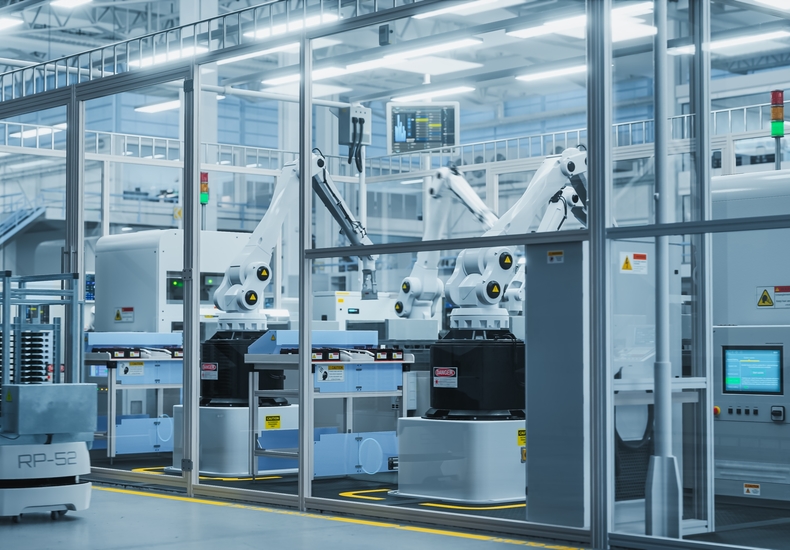
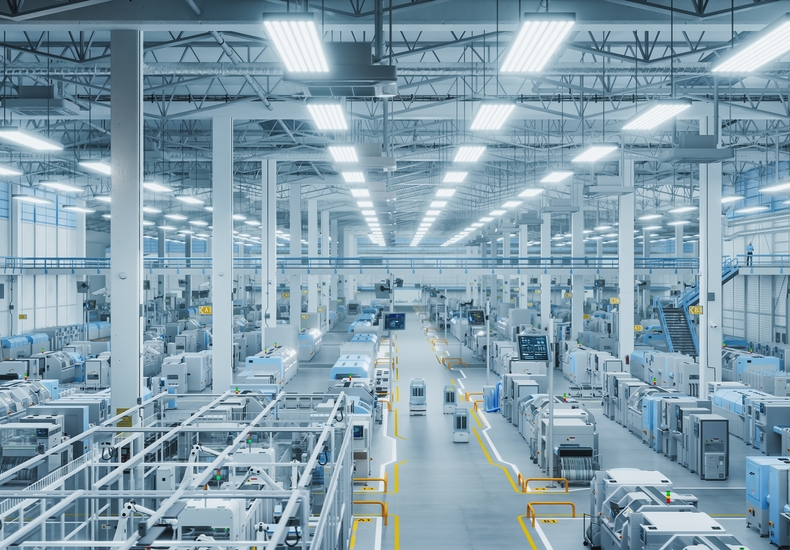
Hochmoderne Fertigungsanlage mit Robotik-Armen und automatisierten Transportsystemen zur Verarbeitung von sensiblen Materialien unter Reinraumbedingungen.

Why Smart Factory E2E?

The requirements for production sites continue to rise: global supply chains, volatile markets and ambitious sustainability targets shape the industrial environment. Traditional factory models quickly reach their limits under these conditions. The Smart Factory provides answers by digitally mapping processes end to end. Data from machines, logistics and the supply chain are integrated into a shared model that creates transparency and accelerates decision-making. This enables efficiency potentials to be realized, capacities to be used more flexibly and sustainability targets to be achieved in a structured manner. 

Enquire about Smart Factory potential analysis 

Metroplan as an enabler of your Smart Factory planning

The Smart Factory requires seamless integration of supply chain, factory and logistics planning as well as Operational Excellence. A consistent data basis is decisive in integrating processes and avoiding information discontinuities. On this foundation, structures emerge that create transparency, accelerate decisions and ensure continuous development during operation. 

Metroplan supports the creation of these prerequisites in both planning and implementation. We connect production and logistics systems, develop robust material flow and layout concepts, and apply digital methods to align factories efficiently, flexibly and sustainably.

Digital methods in Smart Factory planning

The Smart Factory requires planning approaches that make increasing complexity manageable and create transparency. A well-designed set-up of digital methods provides the foundation. Selecting the appropriate approaches based on specific requirements is crucial.

  • BIM methodology: continuous data models across all phases
  • Simulations: robust decisions through scenario analysis
  • Digital twins: basis for maintenance, optimization and training
  • AI & Industrial Metaverse: future potentials for adaptive planning

In this way, factory planning becomes the interface between strategy, technology and operation.

Enquire about Smart Factory

Erfolgsfaktoren 

Our success drivers for a successful Smart Factory:

Digital stringency

Step-by-step transformation

Data-driven decisions

Standardization, digitalization & automation

E2E integration

Flexibility & transformability

Digital
Stringency

Digital Stringency connects processes, systems and data along the entire value stream, from the supply chain through to ongoing operations. The focus is on end-to-end integration. This ensures that information is consistently available, interfaces function reliably and all areas operate on a shared data basis. Uniform structures, centrally accessible systems and clear responsibilities create transparency, reduce media disruptions and minimize sources of error.

Data-driven decisions

Sound decisions are based on valid data. In a Smart Factory, IoT sensors, real-time analytics and digital dashboards provide precise information on production and logistics processes. This enables early identification of weaknesses, systematic use of optimization potential and minimization of downtime. Data-driven decisions increase quality, efficiency and competitiveness.

E2E 
Integration

End-to-end integration connects all areas of the value chain – from supplier integration through to final assembly. Seamless networking of ERP, MES and PLM systems avoids data discontinuities and makes information available in real time. This reduces lead times, increases transparency and ensures smooth processes in production and logistics.

Step-by-step transformation

The transition to a Smart Factory is most successful when implemented in clearly defined steps. Pilot projects, modular solutions and phased implementations minimize risks and deliver fast, measurable results. Step-by-step transformation enables sustainable digitalization that can be flexibly aligned with corporate objectives and market conditions.

Standardization, digitalization & automation

Standardized, digitalized and automated processes form the foundation of an efficient Smart Factory. Uniform workflows, modular structures and proven automation technologies ensure scalability, lower costs and higher process reliability. At the same time, they create the basis for flexible responses to new product requirements.

Flexibility & transformability

Flexibility is essential for success in dynamic markets. A transformable Smart Factory responds quickly to product variants, capacity changes or new customer requirements. Modular systems and adaptive production concepts enable high responsiveness and ensure long-term competitiveness.

Contact

Your Point of Contact

Simon Vehof

Manager Business Development

Matthias Göke

Managing Partner - Factory Planning

Scroll to top